As a naturopathic physician and a widow, I care deeply about the small, practical ways we look after ourselves when life has changed. When meals become irregular, sleep is unsettled, or digestion feels different, the foundations of care deserve attention.
I’ve gathered botanical formulas, nutritional options, and comforting rituals into my personal Grief Medicine edit, so you have a thoughtful place to begin exploring.
Begin with regular meals, enough energy and protein, varied plants, and hydration suited to your health. Consider what is missing before layering on products.
Rhythm, rest & movement
Sleep, daylight, movement that fits your capacity, and supportive relationships belong in the first conversation. Look at the demands placed on your body and the recovery available to it.
Your environment & daily habits
Consider relevant exposures, irritants, personal-care products, and the routines shaping your symptoms. Change what is meaningful and practical; an elaborate routine is not the goal.
A reason for the next step
Review symptoms, current medicines, allergies, pregnancy or preconception plans, and existing results. A test or formula should answer a real question or support a clear need.
04 / Inside the Edit
A place for each selection.
These are distinct options to consider individually. Explore the preparation before deciding what belongs in your care.
01 / NOURISHMENT & FOUNDATIONS
Nourishment & foundations.
Individual selections, considered alongside the foundations of care.
The formulation. Current manufacturer/NIH label lists chicken and beef bone-broth protein concentrates.
The context. A savory protein powder that can make nourishment easier when cooking feels difficult.
The evidence. Its practical contribution is food protein. It does not constitute a nutritionally complete meal or establish healing of grief, a leaky gut or joint disease.
Individual considerations. Check animal-protein sensitivities and shared-equipment allergen information. Individualize protein intake with kidney disease or other dietary restrictions.
Manufacturer product description or ingredient list verified; check the package for the current full label.
The formulation. The current Ora formula description includes organic pea/rice protein plus cranberry, sacha inchi, amaranth and sprouted quinoa, with other plant ingredients.
The context. An unsweetened plant-protein option for adding nourishment to a smoothie or simple meal.
The evidence. Protein and convenience are the relevant purposes. The name and accompanying greens/enzymes do not prove weight loss, detoxification, superior absorption or emotional recovery.
Individual considerations. Check the current unsweetened label for allergens and digestive tolerance; begin with food needs rather than a weight-control goal during poor appetite.
Manufacturer notes a reformulation. Featured protein sources verified, but the complete current Unsweetened panel should be checked rather than borrowing flavored-version ingredients.
The formulation. A packaged nut-based snack; current manufacturer offerings include Coconut Macadamia and Nuts & Honey, with almonds, coconut, macadamias and pecans flagged as allergens.
The context. Portable food for a day when preparing a snack is difficult; pair it with other nourishment according to appetite and need.
The evidence. Short-term fasting/ketone research is not evidence for grief recovery. This collection should not encourage fasting or meal restriction, especially when intake is already low.
Individual considerations. Contains tree nuts; confirm the exact flavor label and any other allergens. Inulin-containing versions can cause gas in sensitive people.
Exact current flavor names and principal allergen categories verified; complete current flavor-specific ingredients were not transcribed from the label images.
The formulation. CellCore describes a broad vitamin, mineral, antioxidant and cofactor supplement.
The context. A multi-nutrient option to consider when dietary intake is inconsistent, after reviewing what is actually missing.
The evidence. Filling a nutritional gap is different from proving cellular repair, detoxification or improved grief outcomes. It cannot replace the energy, protein and fiber in meals.
Individual considerations. Compare all supplements to prevent duplicate vitamin/mineral intake; review medicines and kidney or thyroid conditions with a clinician.
Product identity and broad formulation class verified. Supplement Facts is image-based in the retrieved page; no exact quantities or ingredient-level claims are asserted.
The formulation. High-potency cholecalciferol (vitamin D3), labeled 5,000 IU per unit.
The context. Vitamin D supports calcium handling and bone health; supplementation is most useful when intake or status warrants it.
The evidence. Correcting deficiency is not the same as treating grief or depression. More vitamin D does not automatically improve mood or immune function.
Individual considerations. The named 5,000-IU strength exceeds the usual adult daily upper limit of 4,000 IU. Use requires an individualized plan; excess can cause hypercalcemia and kidney harm.
Manufacturer product description or ingredient list verified; check the package for the current full label.
The formulation. Codeage Instantfood blend of vegetable powders, including broccoli, spinach and kale.
The context. A capsule-based plant ingredient supplement for someone exploring nutritional support.
The evidence. Capsules do not supply the food volume, meaningful meal energy or fiber of eating vegetables. No evidence was established that this formula replaces produce or improves grief outcomes.
Individual considerations. Check botanical sensitivities and the label; persistent low intake should prompt practical meal support and assessment rather than reliance on capsules.
Manufacturer product description or ingredient list verified; check the package for the current full label.
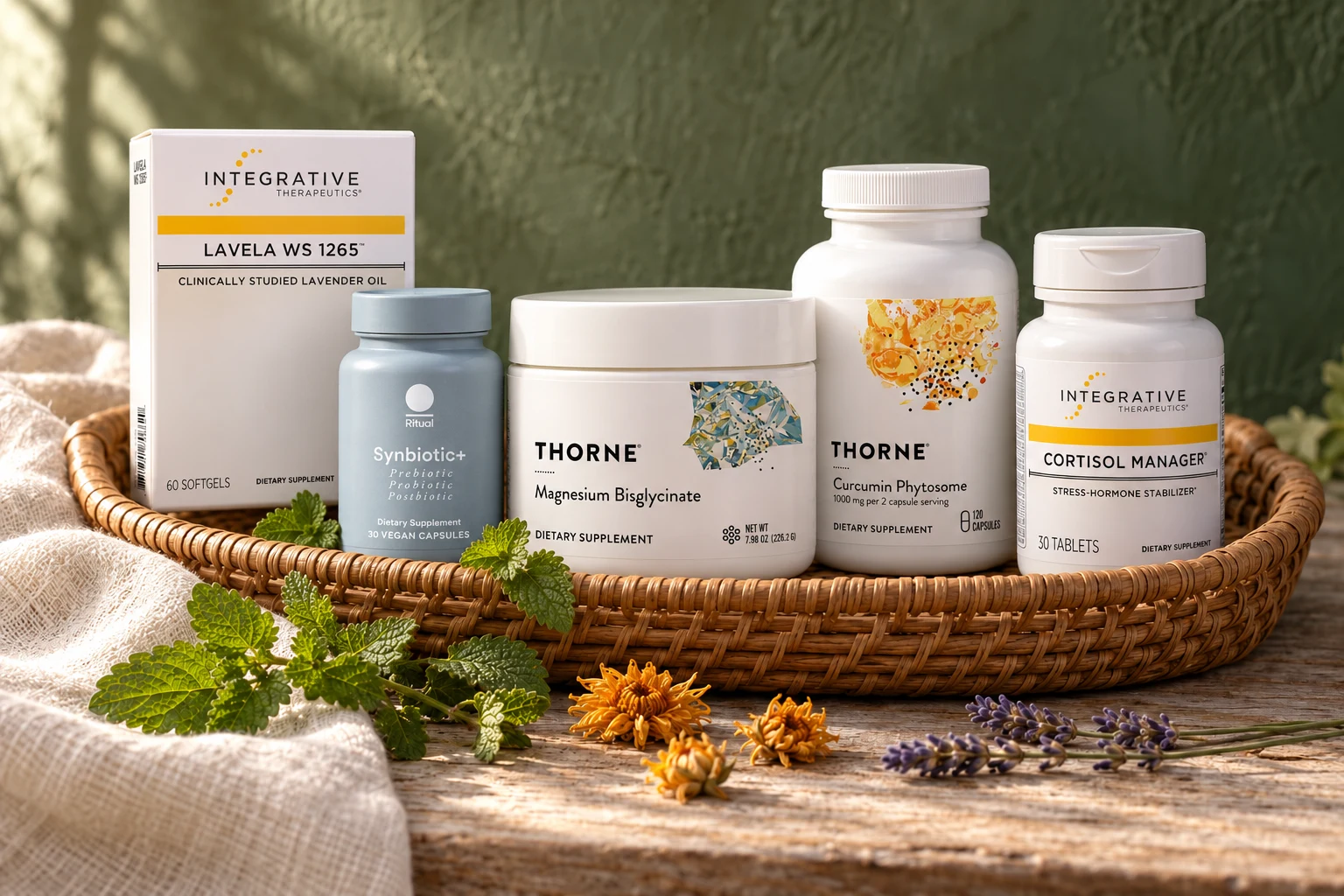
The formulation. Magnesium bound to glycine, sold by Thorne as a lightly sweetened powder with NSF Certified for Sport status.
The context. Magnesium participates in normal nerve, muscle and metabolic function; this is an oral nutrient source.
The evidence. Nutrient adequacy matters, but sleep benefit is not guaranteed. NSF certification addresses product testing, not proof that it treats insomnia or grief.
Individual considerations. Can cause diarrhea or bloating. Kidney disease increases toxicity risk; magnesium can interfere with absorption of certain antibiotics and bisphosphonates.
Manufacturer product description or ingredient list verified; check the package for the current full label.
The formulation. A standardized oral Lavandula angustifolia flower-oil preparation, Silexan, in a softgel.
The context. A defined oral lavender preparation studied for anxiety-related symptoms; it is not the same as an aromatherapy oil.
The evidence. Randomized trials suggest anxiety-symptom benefit with Silexan in selected adults. These trials do not establish treatment of bereavement or justify replacing mental-health care.
Individual considerations. May cause aromatic burps or digestive upset. Manufacturer advises against pregnancy, nursing and use under age 12; review medicines. Do not swallow non-oral essential oils.
Manufacturer product description or ingredient list verified; check the package for the current full label.
The formulation. Original formula contains Sensoril ashwagandha, L-theanine, magnolia bark, epimedium and soy-derived phosphatidylserine.
The context. A multi-ingredient stress/sleep supplement. The original and allergen-free variants should not be treated as identical.
The evidence. Some ashwagandha studies show short-term stress/sleep effects, but ingredient data do not prove the full blend normalizes cortisol. Grief symptoms alone do not diagnose a cortisol disorder.
Individual considerations. Contains soy. Ashwagandha warrants pregnancy avoidance and caution with thyroid/autoimmune disease, sedatives and other medicines; rare liver injury is reported.
Manufacturer product description or ingredient list verified; check the package for the current full label.
The formulation. Gaia PRO describes a botanical/mushroom formula featuring cordyceps and ashwagandha.
The context. An adaptogen-focused blend marketed for stamina; traditional adaptogen language describes a proposed stress-response role.
The evidence. Evidence from selected ashwagandha preparations does not establish that this exact blend restores energy after loss. Persistent fatigue can have nutritional, sleep, medication or medical causes.
Individual considerations. Review mushroom allergy and medicines. Ashwagandha needs caution with thyroid/autoimmune disease and liver symptoms; avoid in pregnancy.
PRO product identity and featured cordyceps/ashwagandha verified; exact full current PRO label not transcribed. Do not silently substitute the renamed retail Ashwagandha & Cordyceps formula.
The formulation. Gaia PRO identifies saffron, lemon balm and spearmint as featured ingredients in its cognitive-support blend.
The context. A botanical option marketed for concentration. Sleep disruption and mental overload can also affect attention during grief.
The evidence. Small studies of individual botanical extracts cannot establish this product treats grief-related brain fog or prevents cognitive disease.
Individual considerations. Check the full current label before use; some versions include ginkgo, making bleeding risk and medication review relevant. Do not use a nootropic to delay assessment of new cognitive symptoms.
Featured herbs verified on the PRO page. Full current label is not exposed as text, so ginkgo is flagged for label confirmation rather than assumed across versions.
The formulation. Meriva curcumin in a sunflower-derived phospholipid complex, in the NSF Certified for Sport version.
The context. The phospholipid preparation changes curcumin exposure and distinguishes it from culinary turmeric.
The evidence. Some curcumin studies suggest benefit for osteoarthritis symptoms; evidence is preparation- and condition-specific. This is not evidence that it treats grief or that greater absorption guarantees a better outcome.
Individual considerations. Review sunflower allergy, gallbladder/bile-duct problems, anticoagulants and cancer treatment. Rare supplement-related liver injury is recognized, including with more bioavailable preparations.
Manufacturer product description or ingredient list verified; check the package for the current full label.
The formulation. A five-part blend of trans-resveratrol, trans-pterostilbene, green-tea phytosome, curcumin phytosome and quercetin phytosome.
The context. A concentrated polyphenol supplement; each component has different metabolism and research questions.
The evidence. Antioxidant chemistry and laboratory aging mechanisms do not establish longer life, reversed aging or recovery from grief in humans using this blend.
Individual considerations. Review medicines, liver conditions and pregnancy. The manufacturer specifically flags curcumin interactions with some chemotherapy agents; avoid unsupervised combination with cancer treatment.
Manufacturer product description or ingredient list verified; check the package for the current full label.
The formulation. Ritual combines LGG and BB-12 probiotic strains, a PreforPro bacteriophage blend and tributyrin.
The context. A three-component gut-health product; a bacteriophage blend is different from the dietary fiber usually called a prebiotic.
The evidence. Benefits must be judged by the exact strains, preparation and digestive outcome. Gut–brain research does not establish this product treats grief or emotional distress.
Individual considerations. Gas or digestive changes can occur. Severe illness or immune compromise calls for clinician review before taking live microorganisms.
Manufacturer product description or ingredient list verified; check the package for the current full label.
The formulation. Organic powdered greens/fruit blend with coconut milk/water, leafy greens, berries, pomegranate/acerola, vegetables and microalgae.
The context. A plant-food powder that can be stirred into an existing meal or smoothie.
The evidence. Plant compounds are a nutritional rationale, not proof of genetic repair, detoxification or recovery from grief. It does not replace adequate meals and varied whole foods.
Individual considerations. Check coconut and other ingredient sensitivities and medication compatibility. The current manufacturer page carries a California lead/reproductive-harm warning; consider this in product selection.
Manufacturer product description or ingredient list verified; check the package for the current full label.
The formulation. Magnesium sulfate heptahydrate bath salts; White Egret offers plain and essential-oil variants.
The context. A warm bath or foot soak can serve as a comforting pause in the day.
The evidence. Relaxation from bathing is not proof that meaningful magnesium is absorbed through skin or that a soak corrects deficiency, removes toxins or treats grief.
Individual considerations. External bath use here, not an oral supplement. Avoid excessive heat, broken skin and fragrance allergens; use care with reduced sensation, dizziness or fall risk.
Manufacturer confirms plain and aromatic variants; confirm which one the approved product listing supplies.
The formulation. Bath-salt blend with several sea salts, red alaea clay, Atlantic kelp, green-tea extract and clove ingredient.
The context. An external mineral/botanical soak for a restorative bathing ritual.
The evidence. Cleanse is part of the product name. There is no established evidence here that this bath draws internal toxins out, corrects mineral deficiency or treats grief.
Individual considerations. External use; avoid eyes, ingestion and broken skin. Kelp/clove or other botanicals may irritate; keep water comfortably warm and prevent slips.
Manufacturer product description or ingredient list verified; check the package for the current full label.
Some days, care can begin with the kettle. This is my blend of oatstraw, lemon balm, holy basil, and chamomile: a warm cup, a familiar scent, a few minutes with nothing to accomplish.
Let the water warm. Let the herbs open. You can simply be here.
01 / Blend a small jar
1 part oatstraw2 tablespoons
1 part lemon balm2 tablespoons
½ part holy basil (tulsi)1 tablespoon
½ part chamomile1 tablespoon
Use dried, food-grade herbs. “Parts” are measured by volume. Mix gently and store in a clean, dry, airtight jar away from heat and light.
02 / Make one warm cup
Place 1 teaspoon of the blend in a tea strainer or covered teapot.
Pour over 1 cup (240 mL) of freshly boiled water.
Cover and steep for 10 minutes, then strain.
Allow it to cool to a comfortable warmth. Add a little honey if you like.
Notice the scent before your first sip. Feel the cup in your hands. Nothing needs to be solved in this moment.
The plants in the cup +
Oatstraw: the grassy, earthy base of this blend, with a longstanding place in Western herbal traditions.
Lemon balm: bright and softly citrus-scented, traditionally used for mild stress, sleep, and digestive comfort.
Holy basil: aromatic tulsi, cherished in Ayurvedic tradition, bringing a warm, spicy note to the cup.
Chamomile: floral and apple-scented, familiar in evening tea rituals.
These traditional uses offer context for the plants. Research on individual preparations does not establish this particular blend as a treatment for grief.
For adults. Avoid this blend during pregnancy, while trying to conceive, or while breastfeeding. If you take medicines, have thyroid or blood-sugar concerns, or are preparing for surgery, seek individual guidance before use. Avoid ingredients you are allergic to; chamomile can trigger reactions in people allergic to related plants such as ragweed.
A test begins with a question. These are options to explore when your history, symptoms, or existing results call for more information. You do not need every test in this directory.
Questions connected with this Edit.
Quest Diagnostics
Vitamin D, 25-Hydroxy, Total, Immunoassay
What it measures
25-hydroxy vitamin D, the main circulating marker used to assess vitamin D status.
Why it is here · When it may be useful
Diet, limited outdoor exposure, bone health, or another clinical factor makes vitamin D assessment useful.
What ordering involves
Serum from a blood draw. Follow the instructions supplied with the exact order. Fasting and medication timing may change when tests are combined.
Keep in mind
Interpret with the reason for testing, symptoms, medical history, and the laboratory method. An isolated result is not a diagnosis.
Daily free cortisol and cortisone, associated metabolites, and DHEA-S in dried urine.
Why it is here · When it may be useful
A clinician has a defined question about adrenal hormone patterns after reviewing sleep timing and relevant symptoms.
What ordering involves
Timed dried urine samples collected with the at-home kit. Use the supplied DUTCH Adrenals Only dried-urine schedule and record collection and sleep times. Review medications and supplements with the ordering clinician.
Keep in mind
Daily patterns are affected by timing, medicines, and collection conditions. These tests do not diagnose grief or adrenal fatigue.
C-reactive protein, a nonspecific marker of inflammation.
Why it is here · When it may be useful
An inflammatory condition is suspected or an established inflammatory pattern needs monitoring.
What ordering involves
Serum from a blood draw. Follow the instructions supplied with the exact order. Fasting and medication timing may change when tests are combined.
Keep in mind
Inflammatory results are nonspecific and may change after recent illness or injury. They do not identify the source of inflammation or measure emotional grief.
The rate at which red blood cells settle, an indirect marker of inflammation.
Why it is here · When it may be useful
The clinical picture calls for an additional nonspecific inflammation marker.
What ordering involves
Whole blood from a blood draw. Follow the instructions supplied with the exact order. Fasting and medication timing may change when tests are combined.
Keep in mind
Inflammatory results are nonspecific and may change after recent illness or injury. They do not identify the source of inflammation or measure emotional grief.
Standard and advanced lipid-related markers plus selected inflammation markers, including ApoB, lipoprotein(a), and high-sensitivity CRP.
Why it is here · When it may be useful
A cardiovascular assessment calls for additional lipid and inflammation detail beyond routine testing.
What ordering involves
Serum from a blood draw. The current storefront marks this test as requiring fasting. Follow the exact order instructions for duration and other preparation; discuss medication timing with the ordering clinician.
Keep in mind
Inflammatory results are nonspecific and may change after recent illness or injury. They do not identify the source of inflammation or measure emotional grief.
Sex hormones and selected metabolites, daily cortisol and cortisone patterns, and selected organic-acid markers.
Why it is here · When it may be useful
A clinician has a specific hormone-metabolism or daily rhythm question after reviewing cycle history, symptoms, and hormone use.
What ordering involves
Timed dried urine samples collected with the at-home kit. Record sleep timing, cycle day when relevant, hormone use, and collection times. Do not substitute DUTCH Complete, Plus, or Cycle Mapping schedules for one another.
Keep in mind
Daily patterns are affected by timing, medicines, and collection conditions. These tests do not diagnose grief or adrenal fatigue.
Selected markers of digestion, intestinal inflammation, and organisms in a one-day stool sample.
Why it is here · When it may be useful
Persistent digestive symptoms warrant a closer look after the diet, bowel pattern, medication history, and clinical assessment have been reviewed.
What ordering involves
Stool collected with the one-day at-home kit. Follow the selected laboratory instructions for collection days, sample handling, and recent antimicrobial or supplement use.
Keep in mind
A stool result is a snapshot. Microbial associations do not prove a cause of symptoms or establish one ideal microbiome; individual markers differ in clinical validation.
Serum iron, iron-binding capacity, transferrin saturation, and ferritin as a marker of iron stores.
Why it is here · When it may be useful
Heavy menstrual bleeding, dietary limitation, suspected depletion, or possible iron overload makes the iron pattern clinically relevant.
What ordering involves
Serum from a blood draw. The current storefront marks this test as requiring fasting. Follow the exact order instructions for duration and other preparation; discuss medication timing with the ordering clinician.
Keep in mind
Interpret with the reason for testing, symptoms, medical history, and the laboratory method. An isolated result is not a diagnosis.
Glycated hemoglobin and calculated estimated average glucose over roughly two to three months.
Why it is here · When it may be useful
There is a reason to assess longer-term glucose regulation alongside nourishment, movement, and sleep.
What ordering involves
Whole blood from a blood draw. A1c alone does not require fasting; other tests in the same order may.
Keep in mind
Anemia, hemoglobin variants, recent blood loss or transfusion, and altered red-cell turnover can affect interpretation. It does not reveal individual meal-related glucose peaks.
Vaginal microbial DNA using shotgun metagenomics, including relative abundance patterns and vaginal community state type.
Why it is here · When it may be useful
Persistent or recurrent vaginal symptoms raise a question about microbial patterns, with findings interpreted alongside examination and tissue health.
What ordering involves
Vaginal swab collected with the at-home kit. The listing describes this test for women over 18. Follow Tiny Health’s supplied vaginal-swab instructions for timing and preparation; do not apply another laboratory’s kit instructions.
Keep in mind
Interpret microbial detection with symptoms and examination. This is not a urine culture or a complete explanation for recurrent urinary symptoms.
Anti-Mullerian hormone, a marker that adds information about ovarian reserve.
Why it is here · When it may be useful
A fertility evaluation needs ovarian-reserve context, especially for anticipating response to ovarian stimulation.
What ordering involves
Serum from a blood draw. AMH can generally be measured on any cycle day; discuss recent hormone use and relevant clinical context.
Keep in mind
AMH informs ovarian reserve and anticipated response to stimulation. It does not measure egg quality or provide a definitive prediction of natural conception.
Inherited genetic variants used to describe selected nutritional, metabolic, and lifestyle-related pathways.
Why it is here · When it may be useful
A person wants to discuss inherited tendencies in nutrition and lifestyle with a clinician familiar with genetic interpretation.
What ordering involves
Buccal swab collected with the at-home kit. Follow the instructions supplied with the exact order. Fasting and medication timing may change when tests are combined.
Keep in mind
Inherited risk is probabilistic. Performance varies by condition and the ancestry of the populations used to develop the model; a risk score does not establish disease.
Glycated hemoglobin, reflecting average blood glucose over approximately two to three months.
Why it is here · When it may be useful
Longer-term glucose trends would inform metabolic care.
What ordering involves
Whole blood from a blood draw. A1c alone does not require fasting; other tests in the same order may.
Keep in mind
Anemia, hemoglobin variants, recent blood loss or transfusion, and altered red-cell turnover can affect interpretation. It does not reveal individual meal-related glucose peaks.
Low concentrations of C-reactive protein using a high-sensitivity assay.
Why it is here · When it may be useful
Cardiovascular risk assessment would benefit from an additional inflammation marker when acute illness is absent.
What ordering involves
Serum from a blood draw. Follow the instructions supplied with the exact order. Fasting and medication timing may change when tests are combined.
Keep in mind
Inflammatory results are nonspecific and may change after recent illness or injury. They do not identify the source of inflammation or measure emotional grief. These two high-sensitivity CRP listings are alternatives, not a reason to order duplicate measurements.
Low concentrations of C-reactive protein using a high-sensitivity assay; a separate ordering option within the Cardio IQ range.
Why it is here · When it may be useful
Cardiovascular risk assessment calls for high-sensitivity CRP; choose this or the other hs-CRP option rather than ordering both routinely.
What ordering involves
Serum from a blood draw. Follow the instructions supplied with the exact order. Fasting and medication timing may change when tests are combined.
Keep in mind
Inflammatory results are nonspecific and may change after recent illness or injury. They do not identify the source of inflammation or measure emotional grief. These two high-sensitivity CRP listings are alternatives, not a reason to order duplicate measurements.
The response of living white blood cells to different nutrient conditions in a laboratory assay.
Why it is here · When it may be useful
A clinician is exploring a nutritional question and can relate the assay to intake, symptoms, and established nutrient testing.
What ordering involves
Whole blood collected by a phlebotomist using the supplied kit. Follow the selected laboratory collection and shipping schedule; SpectraCell currently says no fasting is needed for its individual Micronutrient Test.
Keep in mind
An ex-vivo cell-response assay is different from a serum nutrient concentration. Use alongside diet, symptoms, and established tests rather than assuming every flagged result requires high-dose supplementation.
Combinations of inherited variants used to estimate susceptibility to selected conditions.
Why it is here · When it may be useful
A genetics-informed prevention conversation includes family history, current biomarkers, the limitations of risk scores, and privacy considerations.
What ordering involves
Saliva collected with the at-home kit. Follow the instructions supplied with the exact order. Fasting and medication timing may change when tests are combined.
Keep in mind
Risk estimates are probabilistic, not diagnoses. The current listing describes comparison with a European reference dataset, so applicability across ancestries needs particular care.
Microbial DNA from shotgun metagenomic sequencing together with selected stool chemistry markers.
Why it is here · When it may be useful
Persistent digestive concerns warrant a discussion about whether microbial and stool-chemistry information would change care.
What ordering involves
Stool collected with the at-home kit. Follow the selected laboratory instructions for collection days, sample handling, and recent antimicrobial or supplement use.
Keep in mind
A stool result is a snapshot. Microbial associations do not prove a cause of symptoms or establish one ideal microbiome; individual markers differ in clinical validation.
DNA-methylation-based estimates of biological aging and related health patterns.
Why it is here · When it may be useful
An informed longevity discussion includes exploratory aging estimates alongside established metabolic markers and physical function.
What ordering involves
Bloodspot collected with the at-home kit. The current storefront marks this test as requiring fasting. Follow the exact order instructions for duration and other preparation; discuss medication timing with the ordering clinician.
Keep in mind
Methylation-derived estimates are not direct measurements of serum nutrients or hormones, a disease diagnosis, or proof of lifespan extension.
Selected antioxidant nutrients: vitamins A, C, E, and coenzyme Q10.
Why it is here · When it may be useful
Diet, absorption, or supplementation raises a focused question about selected antioxidant nutrients.
What ordering involves
Serum from a blood draw. The current storefront marks this test as requiring fasting. Follow the exact order instructions for duration and other preparation; discuss medication timing with the ordering clinician.
Keep in mind
This panel measures vitamins A, C, E, and CoQ10, not collagen, skin appearance, or every antioxidant system.
An occupational, household, dietary, or environmental history suggests exposure to one of the measured metals.
What ordering involves
Whole blood from a blood draw. Follow the instructions supplied with the exact order. Fasting and medication timing may change when tests are combined.
Keep in mind
Interpret with the reason for testing, symptoms, medical history, and the laboratory method. An isolated result is not a diagnosis.
Selected metals excreted in urine over a complete 24-hour collection.
Why it is here · When it may be useful
A specific exposure question requires assessment of metal excretion over a full day.
What ordering involves
Complete 24-hour urine collection using the laboratory container. Follow the exact start/stop and storage instructions. Incomplete collection affects results; do not add a chelation challenge.
Keep in mind
Excretion over one day is not total body burden. Recent exposures and specimen handling matter.
Selected environmental chemical metabolites in a urine specimen.
Why it is here · When it may be useful
A relevant exposure history supports a discussion about whether measured urinary chemical metabolites would change practical exposure reduction.
What ordering involves
Urine collected with the at-home kit. Use the RealTime Labs urine kit and its current collection, storage, and shipping instructions. Do not substitute blood-collection instructions.
Keep in mind
A spot urine finding reflects the substances measured and recent exposure or excretion. It does not establish total body burden, locate the source, or prove the cause of symptoms.
Arsenic, lead, and mercury in a random urine sample.
Why it is here · When it may be useful
The exposure history points toward arsenic, lead, or mercury and the selected specimen fits the clinical question.
What ordering involves
Random urine sample collected according to the order instructions. Follow the exact assay instructions and disclose recent seafood intake when arsenic is measured. Do not add a chelation challenge.
Keep in mind
Speciation may be needed to distinguish arsenic forms. Concentration and recent exposure affect urine findings; results are not a total toxin burden.
Total cholesterol, HDL cholesterol, LDL cholesterol, triglycerides, and calculated lipid measures.
Why it is here · When it may be useful
A baseline or follow-up cardiovascular assessment is needed.
What ordering involves
Serum from a blood draw. The current storefront marks this test as requiring fasting. Follow the exact order instructions for duration and other preparation; discuss medication timing with the ordering clinician.
Keep in mind
Interpret with the reason for testing, symptoms, medical history, and the laboratory method. An isolated result is not a diagnosis.
Selected metabolic, electrolyte, protein, kidney, and liver-related markers. This specific panel omits carbon dioxide and ALT.
Why it is here · When it may be useful
A clinician specifically selects this reduced metabolic panel and confirms that omitted markers are not needed for the question.
What ordering involves
Serum from a blood draw. Follow the instructions supplied with the exact order. Fasting and medication timing may change when tests are combined.
Keep in mind
This is not the same panel as the Women’s Health Comprehensive Metabolic Panel: CO2 and ALT are omitted. Confirm which measurements are needed before ordering.
TSH, free and total T3, free and total T4, plus thyroid peroxidase and thyroglobulin antibodies.
Why it is here · When it may be useful
Symptoms, family history, or previous thyroid findings call for both thyroid-function and antibody assessment.
What ordering involves
Serum collected by a phlebotomist using the supplied kit. Follow the instructions supplied with the exact order. Fasting and medication timing may change when tests are combined.
Keep in mind
Interpret with the reason for testing, symptoms, medical history, and the laboratory method. An isolated result is not a diagnosis.
A broad set of 55 reported biomarkers selected for an assessment of female health; review the current analyte list to avoid duplicate orders.
Why it is here · When it may be useful
A wider baseline is clinically justified after reviewing existing results and the risk of unnecessary overlapping tests.
What ordering involves
Blood draw; the listing specifies plasma, serum, and whole blood. The current storefront marks this test as requiring fasting. Follow the exact order instructions for duration and other preparation; discuss medication timing with the ordering clinician.
Keep in mind
This Quest panel overlaps with individual tests. Review the exact 55-marker list and existing results before ordering; a broad panel can produce incidental findings.
Red-cell measures, hemoglobin, hematocrit, platelets, and a white-cell differential.
Why it is here · When it may be useful
Fatigue, suspected anemia, immune-cell changes, or another clinical question warrants a blood count.
What ordering involves
Whole blood from a blood draw. Follow the instructions supplied with the exact order. Fasting and medication timing may change when tests are combined.
Keep in mind
Interpret with the reason for testing, symptoms, medical history, and the laboratory method. An isolated result is not a diagnosis.
Selected oral organisms and oral pH using a targeted quantitative PCR profile.
Why it is here · When it may be useful
A dental or medical clinician considers a targeted microbial profile useful alongside oral examination and daily oral-care history.
What ordering involves
Oral specimen using the supplied kit; the storefront lists saliva. Confirm the kit method before collection. The storefront lists saliva, while manufacturer instructions describe an oral collection kit. Confirm and follow the supplied kit method and restrictions on recent eating, drinking, and oral products.
Keep in mind
A targeted profile is not a complete census of the oral ecosystem. Detection does not independently establish active dental disease or systemic disease causation.
Urine chemistry and microscopic findings, with culture performed only when the laboratory reflex criteria are met.
Why it is here · When it may be useful
Current urinary symptoms require evaluation for infection or another urinary problem.
What ordering involves
Urine collected according to the laboratory instructions. Obtain during symptoms when evaluation is needed. Collect before antimicrobial treatment when feasible, without delaying necessary assessment or treatment.
Keep in mind
A culture is not automatic for every sample. Reflex criteria, contamination, and recent antimicrobials affect interpretation; persistent symptoms may require reassessment.
Ordering eligibility, availability and collection fees can vary by test and location. Confirm the current listing and your clinician’s instructions before ordering. Laboratory results belong within your history and care; no single result identifies the whole cause of a symptom.
No product removes the experience of loss. Food, rest, connection, psychological support, and care for persistent symptoms remain central. The collection offers individual nutritional and daily-care options.
Are the foods in this Edit a fasting recommendation?
No. Their place here is accessible nourishment when planning or preparing meals feels difficult. They are not a reason to restrict food during grief.
When might testing help?
When symptoms, history, or changes in nourishment suggest a specific clinical question. There is no laboratory test that measures the depth of grief.
10 / Research & references
The details behind the Edit.
Research & references
Individual preparation references appear with each selection. Traditional uses and laboratory findings are distinguished from human clinical evidence. These educational collections do not establish a physician–patient relationship. Purchases through the Fullscript links may financially support my practice.
The Foundations · My gift to you
Return to the ground your body knows.
Before protocols. Before supplements. Begin with water, nourishment, breath, and the everyday environment that supports your health.