Sleep & exhaustion
Difficulty settling, interrupted nights, or feeling depleted even after rest.


Grief medicine · The body after loss
Medical care for the physical effects of grief.
For widows and women after the loss of a partner.
A gentle place to begin
If caring for yourself feels difficult after losing your partner, you can begin with something simple. My free Foundations course offers self-paced lessons on everyday health. There is no need to rush through them.
16 audio lessons with Dr. Michele Burklund
14 companion PDF guides
What no one prepares you for
Perhaps you are exhausted, but sleep will not come. Your appetite has changed. Your thoughts feel harder to gather. The ordinary work of being in a body asks more of you than it once did.
Grief can be physical as well as emotional. Those experiences deserve attention, without assuming that every new symptom is caused by loss.
We make space for your story.
And look carefully at your health.
A whole-person approach
Grief medicine is the name I give to my work with the physical health of women after loss. I bring naturopathic and functional assessment together with nourishment, rest, nature, and the realities of widowhood.
It describes my approach, rather than a separate board-certified medical specialty. There is room here for your biology, your beliefs, and the life you are learning to inhabit.
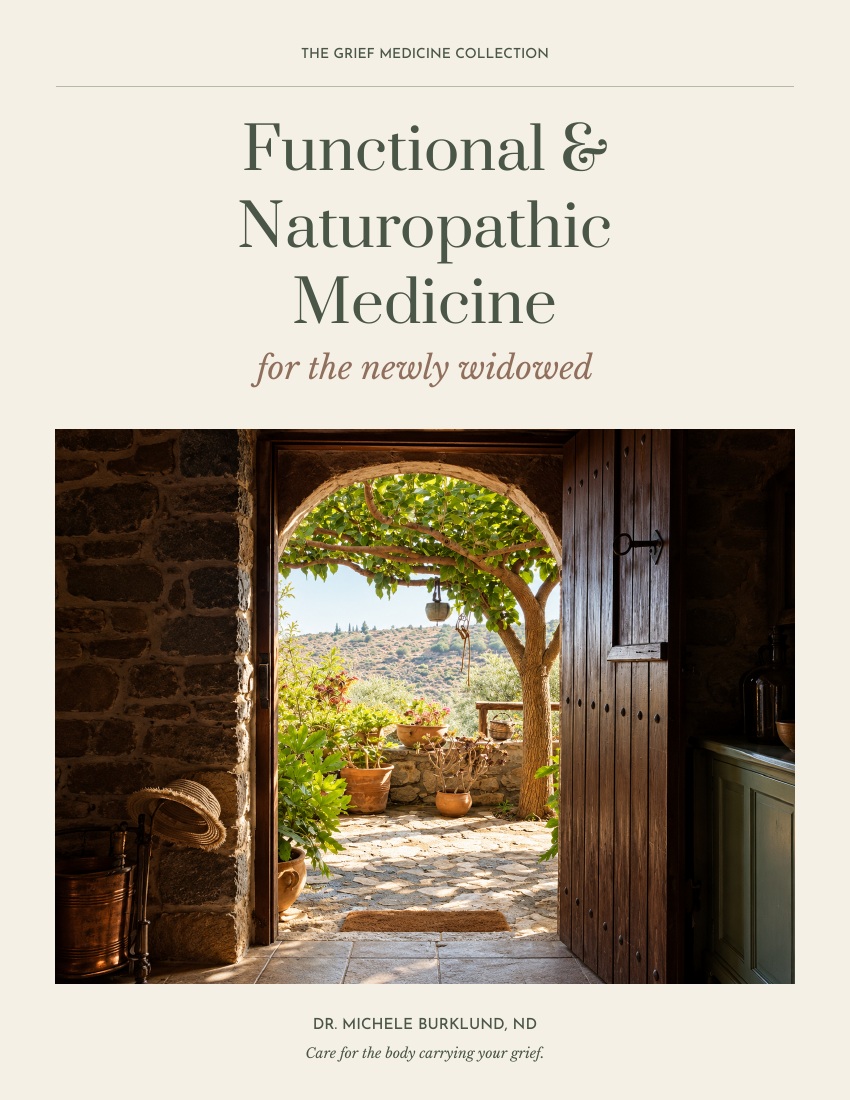
A free guide for the newly widowed
When even the smallest things ask so much of you, a little guidance can be something to return to.
I created Functional & Naturopathic Medicine for the Newly Widowed to bring everyday care back within reach: rest, simple nourishment, and quiet moments of connection with yourself.
Sleep & daily rhythms · Easy meals
Grounding rituals · A comforting herbal tea

More than an emotion
Difficulty settling, interrupted nights, or feeling depleted even after rest.
Changes in appetite, digestive discomfort, or the challenge of caring for yourself day to day.
Feeling foggy, distracted, or unable to gather your thoughts. Everyday decisions may take more effort.
Restlessness, muscle tension, headaches, or a sense that your body cannot settle. New symptoms still deserve their own evaluation.
Feeling overwhelmed or disconnected, with less energy for people, routines, and activities that once felt familiar.
Existing conditions, medications, cycle changes, and other symptoms still need their own clinical attention.
New, persistent, or worsening symptoms deserve assessment, even when they begin after a loss.
Widowhood & your health
Losing a spouse or partner can change the most ordinary parts of caring for yourself: the meal you used to share, the person beside you at night, the reminder to rest. You may be managing work, children, finances, or the aftermath of caregiving while trying to understand what your own body needs.
When I care for a widow, I begin with those realities. I make room for exhaustion, interrupted sleep, changes in appetite, and difficulty concentrating, alongside the health concerns that were present before your loss. You do not need to have a clear explanation, or to be “doing better,” to ask for support.
Our next step may be small: a more manageable eating routine, a plan for sleep, a review of medications, or an assessment of symptoms that have continued. I want your care to fit the capacity you have today.
You are more than what happened.
And your health still matters.
What the research is exploring
I bring research into our conversation to help us understand the physical experience of loss. It informs my questions; your history and experience guide your care.
01 / Stress & inflammation
A 2020 conceptual review describes possible pathways between bereavement, stress responses, and immune activity. These mechanisms are still being studied. They do not mean that every grieving person has abnormal inflammation or needs an immune panel.
Seiler et al. · Frontiers in Psychiatry, 202002 / Sleep & recovery
A longitudinal study of recently bereaved spouses examined sleep and inflammation over the first six months. Associations varied with socioeconomic circumstances. The findings support attention to sleep and daily resources; they do not establish that poor sleep alone caused the observed changes.
Wu et al. · Comprehensive Psychoneuroendocrinology, 202103 / Heart health
A large Swedish cohort study published in 2026 found an association between partner loss and cardiovascular disease. It does not establish that grief alone caused the difference. When we work together, I encourage you to stay in contact with me and your other clinicians, and to tell us when something changes.
Yang et al. · JAMA Network Open, 2026New chest pain, severe shortness of breath, fainting, or stroke symptoms need urgent medical attention. Do not assume they are grief.
Research links updated October 23, 2026. I use this research as context; your care begins with an individual clinical assessment.
The approach
I use the therapeutic order to guide these four areas of care, beginning with your foundations and adding targeted treatment according to your needs.
I begin by understanding your sleep, daily rhythms, and stress, then help you find practical ways to rest.
I help you attend to nourishment, hydration, movement, and the everyday needs that can become difficult after loss.
I evaluate persistent symptoms through your history, examination, and appropriate testing, then discuss treatment for what we identify.
I build a realistic plan with you, revisit your response, and coordinate with your other clinicians or grief counselor when appropriate.
Clinical & functional evaluation
Your sleep. Your energy. Your cycle. The way your body feels. We begin with what has changed, your health history, and the symptoms you want help understanding.
Depending on your symptoms and health history, we may explore hormone levels, thyroid function, inflammatory markers, and cardiovascular health, including blood pressure and cholesterol. Cortisol testing may be appropriate when your history or examination suggests an adrenal concern. Each test is chosen to answer a meaningful question and help shape your care.
Your story guides the questions.
Your biology helps shape the care.

Medicine meets lived experience
I am a licensed naturopathic primary care physician. I am also a widow.
After losing my husband, I experienced how grief could alter the most ordinary parts of life. My clinical training taught me to investigate. My own experience deepened the way I listen.
I bring both to this work: thoughtful medical care and respect for a loss that cannot be reduced to a diagnosis. Here, my clinical focus is the physical experience of grief and women’s health.

A moment, just for you
The water is always changing. The light. The current. The water at its edges. We cannot step into the same river twice.
In grief, acceptance can be as small as acknowledging: this is where I am today. It does not ask us to approve of what happened, stop missing someone, or leave our love behind.
Spend one minute with the sound of water.
No pressure to move forward. Just room to be.
One minute of river sounds. Press play when you’re ready.
A quiet invitation from Dr. Michele Burklund. Pause whenever you wish.

Grief Medicine · The Restoration Protocol
Nourishing the body
that carries the loss.
As a naturopathic physician and a widow, I care deeply about the small, practical ways we look after ourselves when life has changed.
When meals become irregular, sleep is unsettled, or digestion feels different, the foundations of care deserve attention.
I’ve gathered botanical formulas, nutritional options, and comforting rituals into my personal Grief Medicine edit—so you have a thoughtful place to begin exploring.
Opens my Fullscript collection. Choose individual products and order what fits your needs.
A closer look inside
All eighteen selections from my Restoration Protocol, gathered here as individual options. Begin with nourishment, rest, gentle movement, and connection; choose additional support around your needs.
Protein options and simple snacks for the days when preparing food asks more of you.
Choose the foods and protein options that work for you, alongside regular meals.
Begin with eating enough. Nutrient choices follow your food intake, symptoms, and meaningful laboratory findings.
Vitamin D strength and use belong in an individual plan informed by your vitamin D status.
Regular meals, a gentler evening rhythm, and room to rest come first. These are individual options for the conversation that follows.
Select around your sleep pattern, medicines, and health history.
Botanical blends and curcumin are part of my wider naturopathic approach, chosen around a specific need.
Review overlapping ingredients when considering more than one formula.
The microbiome, nutrition, and the demands of daily life belong in a whole-person assessment. Explore these additional selections individually.
Warm water. A quiet room. A bath or foot soak can become a familiar pause at the end of the day.
Follow each product’s bathing directions.
Your next step
View the products, ingredients, and current pricing in one place. Choose the items that fit your needs.

Make something gentle · a DIY botanical ritual
Some days, care can begin with the kettle. This is my blend of oatstraw, lemon balm, holy basil, and chamomile: a warm cup, a familiar scent, a few minutes with nothing to accomplish.
Let the water warm.
Let the herbs open.
You can simply be here.
01 / Blend a small jar
Use dried, food-grade herbs. “Parts” are measured by volume. Mix gently and store in a clean, dry, airtight jar away from heat and light.
02 / Make one warm cup
Notice the scent before your first sip. Feel the cup in your hands. Nothing needs to be solved in this moment.
Oatstraw: the grassy, earthy base of this blend, with a longstanding place in Western herbal traditions.
Lemon balm: bright and softly citrus-scented, traditionally used for mild stress, sleep, and digestive comfort.
Holy basil: aromatic tulsi, cherished in Ayurvedic tradition, bringing a warm, spicy note to the cup.
Chamomile: floral and apple-scented, familiar in evening tea rituals.
These traditional uses offer context for the plants. Research on individual preparations does not establish this particular blend as a treatment for grief.
For adults. Avoid this blend during pregnancy, while trying to conceive, or while breastfeeding. If you take medicines, have thyroid or blood-sugar concerns, or are preparing for surgery, seek individual guidance before use. Avoid ingredients you are allergic to; chamomile can trigger reactions in people allergic to related plants such as ragweed.
Botanical reading: EMA · Lemon balm · NCCIH · Chamomile · MSK · Holy basil · Holy basil · Safety
Care for the body carrying the grief
After loss, you may feel on high alert: unsettled sleep, a racing mind, or a body that cannot quite soften. Grief can affect the stress-response system. Studies have found cortisol changes months after bereavement, including at six months in some older adults; your body’s response has its own course.
Research in older adults also links partner loss with a higher risk of cardiovascular events in the early weeks and months, with a particularly clear increase in the first 30 days. This is a reason to care for your foundations and consider your individual health picture.
Stress & daily rhythm
A way to explore cortisol patterns alongside your sleep, energy, daily rhythms, and medication history. The results can add context to a clinical assessment and help shape more specific questions about your physiology and care.
Explore cortisol testingCardiovascular context
Explore selected cardiovascular and inflammation markers alongside blood pressure, family history, nourishment, movement, and existing results. This adds information to a wider assessment; a panel alone cannot predict or rule out a heart attack.
Explore heart-health testingBegin with food, hydration, rest, gentle movement, and support. Testing is individual—not every newly widowed woman needs these panels. New chest pain, fainting, or severe shortness of breath needs urgent medical care rather than an online test order.
The studies describe group patterns, primarily in older adults; they do not establish a fixed six-month “fight-or-flight” state or show that purchasing these panels prevents cardiovascular events.
Spousal loss and cortisol at six and eighteen months Cardiovascular events after partner bereavementDr. Burklund’s selected labs
Care for the body carrying the grief. My selected tests explore vitamin D, thyroid function, cortisol patterns, inflammation, and cardiovascular health.
Measures 25-hydroxy vitamin D, the main circulating marker used to assess vitamin D status. In a period when time outdoors, food intake, and daily routines may change, I consider whether this foundational nutrient deserves closer attention. The result can inform an individualized discussion about food sources, sun exposure, and supplementation rather than guessing at a dose.
Looks at cortisol and cortisone measurements collected at different times of day. The pattern adds context to the body’s daily hormonal rhythms and is considered alongside sleep timing, medications, and collection conditions. In grief care, I bring this information into the wider conversation about rest and daily rhythm; the test does not measure the depth of your grief.
Measures C-reactive protein, a substance produced by the liver that rises with inflammation. It can help show whether an inflammatory process deserves further attention or whether an established pattern is changing. I interpret it alongside symptoms, recent illness, and other findings, because a raised result does not identify the source of inflammation by itself.
Measures how quickly red blood cells settle in a tube over a set period. This provides an indirect view of inflammation and can complement other measurements when the clinical picture calls for it. I look at the result alongside blood counts, symptoms, and history, rather than treating it as a specific diagnosis or a measure of emotional stress.
Brings more detailed cholesterol-related measurements together with selected inflammation markers. This allows a broader cardiovascular conversation than total cholesterol alone. I consider the pattern alongside family history, blood pressure, metabolic health, sleep, nourishment, and movement—especially when the disruptions of loss have changed the routines that usually support your physical health.
Measures TSH, free T4, and free T3, giving a view of the regulatory signal and circulating thyroid hormones. Thyroid changes can overlap with concerns such as low energy, altered bowel habits, temperature sensitivity, or changes in mood. I consider these results when exploring physical contributors to symptoms during grief, while keeping your wider experience at the center of care.
These tests explore aspects of physical health; they do not measure grief.
Choose individual tests around your history, symptoms, and existing results, with your clinician’s guidance.
Look beneath the symptoms
In my naturopathic and functional approach, we begin with nourishment, sleep, daily rhythms, and the support you have around you. When symptoms persist, thoughtfully chosen labs can help us investigate what else your body may need.
I interpret results alongside your history, symptoms, and changes over time. The goal is a useful next step for you.
Depending on your diet, symptoms, and history, these tests can help investigate anemia, iron status, and selected nutrient deficiencies that may contribute to fatigue.
Persistent fatigue, weight changes, or other symptoms may prompt thyroid and metabolic assessment. The tests we choose depend on the question we are trying to answer.
Your digestive symptoms, food tolerance, and bowel patterns belong in the conversation. Depending on the findings, targeted blood or stool testing may investigate inflammation, infection, or conditions such as celiac disease. CRP or ESR may be useful for particular clinical questions.
A commercial microbiome profile is not a standalone diagnosis. We consider whether its findings can meaningfully guide your care.
Cycle changes, night sweats, or other symptoms deserve assessment. Hormone tests are selected for a specific question; perimenopause is often assessed from your history and symptoms. Cortisol testing is considered when there is a clinical reason to investigate an adrenal disorder.
Explore the tests in my Grief Medicine Lab Edit.
Order tests myselfNot every person needs every test. Explore private care and discuss which labs fit your situation
Your pace. Your choices.
Explore the collection at your own pace. Read about each product, choose what fits your needs, and order individual items directly through my Fullscript storefront.
Open my Grief Medicine protocol and explore the recommended products.
Review ingredients, directions, and current pricing. Ask for help if you’re unsure.
Select individual items and complete your purchase on Fullscript.
For help choosing supplements or doses, explore private care .
The care behind every choice
Too many bottles. Conflicting advice. A label that tells you very little about why this formula belongs in your life. I created my apothecary to make the choices more considered.
As a naturopathic physician and functional medicine doctor and botanical formulator, I begin with nourishment, sleep, movement, and the conditions that support health. Supplements have a place within that foundation. The ingredient, preparation, dose, and reason for choosing it all matter.
Explore the current savings shown in your Fullscript account. The storefront advertises up to 15% off eligible products; the offer applied at checkout may vary.
You are exploring the formulas I have selected around the questions women bring me: hormones, skin, fertility, longevity, and the physical effects of grief. My clinical and formulation background shapes what I choose. Read the details, consider what fits, and leave the rest. The collection is there to make your choices more thoughtful, not more numerous.
The name on the front tells only part of the story. Turn it around and compare the ingredient form, amount per serving, number of capsules, other ingredients, and servings in the bottle. With botanicals, the species and preparation matter too. I want to know what you are actually getting and why it belongs in your routine.
A root is not always the same medicine as a leaf. A tea, tincture, whole herb powder, and concentrated extract can also deliver very different constituents. I look at the species, plant part, extraction, and intended use together. An impressive milligram number is only useful when you know what it describes.
I mean that the details deserve scrutiny: ingredient identity, purity, potency, the preparation, and the way it was made. I look for documented manufacturing and testing standards, then ask whether the formula fits the purpose. Quality helps us trust the bottle; a thoughtful assessment helps decide whether you need it.
I choose the formulas, and Fullscript handles the shop and delivery. Its documented approach to sourcing, quality review, and storage matters to me, particularly for botanicals and ingredients sensitive to heat or time. You can read the full label and current product details before deciding.
They can. Heat, moisture, light, and time affect some ingredients more than others. Fullscript follows manufacturer handling guidance and uses protective packaging when appropriate. A thawed cold pack alone does not tell you the product is damaged. Bring orders inside promptly, follow the label, and ask Fullscript about anything concerning.
Check the date and storage instructions when your order arrives, and buy an amount you can reasonably use. Some brands print a manufacturing date instead of an expiration date; Fullscript can clarify that for you. Freshness and careful handling belong in the quality conversation alongside the formula itself.
Explore the current savings shown in your Fullscript account. The storefront advertises up to 15% off eligible products; the offer applied at checkout may vary.
These savings are for supplements. Lab tests, shipping, and taxes are separate. If the expected discount is not displayed, ask Fullscript support to check your connection to Dr. Michele Burklund’s storefront before placing the order.
When you’re ready
We can begin with what you are experiencing.
Inquire about grief careThe questions we carry
Clear answers about grief, the body, daily support, and working together. Choose a theme or read at your own pace.
It is the name I give to caring for the body after loss. Sleep, appetite, energy, digestion, and the nervous system can all feel different while you are grieving. I bring naturopathic and functional medicine together with nourishment, nature, ritual, and an understanding of widowhood. It describes my approach, not a separate medical specialty.
The word you cannot find. The errand you forget halfway through. Grief can leave concentration and memory feeling unfamiliar, especially when sleep and nourishment have been disrupted. I begin with those foundations and the demands of your days. Sudden confusion or a major change in functioning needs prompt assessment.
Nights can feel completely different when the person beside you is gone. Routines, responsibilities, and your sense of safety may have changed. Begin with a steady waking time, daylight, regular meals, and a gentle evening rhythm you can tolerate. Persistent insomnia deserves specific support; CBT for insomnia can be one useful part of that care.
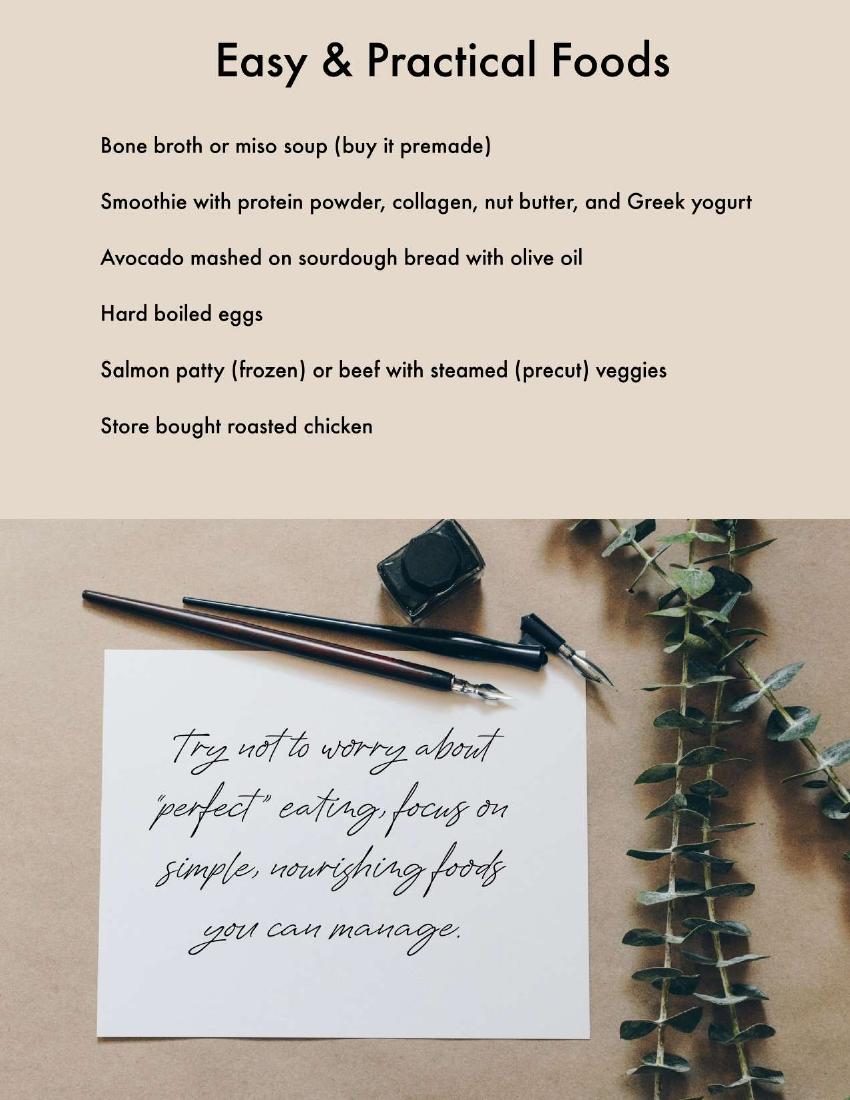
Start with something you can manage: soup and bread, eggs on toast, yogurt with oats, or a meal someone leaves at your door. Small, regular nourishment counts. Let another person shop or cook when possible. If appetite stays low or weight is changing unintentionally, we need to look more closely at what your body requires.
Sometimes as a meal. Sometimes as a scent, a garden, or a small ritual of remembrance. Botanical preparations can also support specific concerns when they fit your health history and medicines. I keep those uses distinct. A meaningful connection with a plant does not have to become another product to take.
Yes. You may find meaning in prayer, nature, a candle, a familiar song, or a quiet ritual that belongs only to you. Those practices can sit beside attention to sleep, nourishment, symptoms, and appropriate assessment. There is room for your beliefs, and no requirement to have any particular belief at all.
Then you can stop. Try keeping your eyes open, noticing the room, walking beside someone, or choosing a different form of support. Stillness is not always comforting, particularly after loss or trauma. You do not have to push through distress to do a practice correctly.
Whenever you want more support. You do not have to wait until you are barely functioning or until a certain number of months has passed. If grief is making daily life persistently difficult, a qualified grief therapist can help you find a form of care that meets you where you are.
There is no required sequence. Feelings may overlap, disappear for a while, or return on an ordinary Tuesday. A model can give you language, but it should never become another standard you feel you are failing to meet.
Offer something specific: dinner on Thursday, a ride, an errand, or quiet company. Make it easy to decline, ask before arriving, and keep checking in after the first weeks. You can say the person’s name and listen. You do not need to find the sentence that makes it better.
Begin with something small and available now. Read a grief guide, listen to a lesson from The Foundations, or step outside with a cup of tea. You can use these resources at your own pace, without booking an appointment or buying anything.
There is no neat timetable. Sleep, appetite, and energy may change over months and resurface around reminders. I look at what your body needs now rather than asking whether you should be over it. Persistent exhaustion, major weight change, or difficulty managing daily life deserves care along the way.
Grief asks a great deal of the body. Broken sleep, irregular meals, caregiving, and the practical work of widowhood can leave very little recovery. I start there, while also considering contributors such as low iron, thyroid changes, medicines, or depression. The aim is to understand the fatigue rather than ask you to push through it.
No number can measure your loss. A targeted test may help us explore a specific physical concern, such as persistent fatigue or a change in nourishment, but it cannot grade your grief. We begin with your experience and choose testing only when the answer could help guide care.
I serve as your consulting doctor for the concern we agree to explore. That gives us focused time together without enrolling you in ongoing general patient care. Keep your primary care clinician for routine prevention, ongoing medical needs, and coordination beyond our consultation.
My focus is the physical experience of loss and the foundations that help support your health. That can sit alongside grief counseling, psychotherapy, or a support group. Emotional support and attention to the body belong in the same wider conversation.
This part of my work is for widows and women navigating the loss of a partner who want help understanding what has changed in their health. Your inquiry gives us a starting point to consider your needs and whether a focused consultation is a fit.
Virtual appointments may be available when your location, needs, and the requirements for the service allow. Tell me where you will physically be for the appointment, and we confirm eligibility before booking. You can read more about location here.
Send a brief note about what brings you here through the relevant consultation form. You do not need to share your entire history at this stage. We confirm fit, scope, and availability, then explain how to share further details securely.
Yes. My Functional & Naturopathic Medicine for the Newly Widowed guide brings together simple nourishment, rest, and gentle rituals in 15 pages. Request your copy here. The download appears after signup, and you can unsubscribe whenever you wish.
A few useful answers
There is room here for the physical experience of loss, as well as the love, memory, and meaning that no laboratory can measure.
It is the name I give to caring for the body after loss. Sleep, appetite, energy, digestion, and the nervous system can all feel different while you are grieving. I bring naturopathic and functional medicine together with nourishment, nature, ritual, and an understanding of widowhood. It describes my approach, not a separate medical specialty.
It can change sleep, appetite, energy, and concentration, and some people notice headaches or dizziness. I want to understand the timing and care for the foundations while investigating symptoms that persist or worsen. Severe chest pain, difficulty breathing, or sudden severe symptoms need urgent assessment, even during grief.
No number can measure your loss. A targeted test may help us explore a specific physical concern, such as persistent fatigue or a change in nourishment, but it cannot grade your grief. We begin with your experience and choose testing only when the answer could help guide care.
The collection offers support for particular physical needs; grief itself does not need to be fixed with a bottle. Food, rest, connection, practical help, and room for your loss come first. A nutrient or botanical may have a specific role after considering your health, medicines, and what you need support with.
You can explore the Grief Medicine Lab Edit, read the Grief Medicine resources, or inquire about a focused consultation. Choose the doorway that meets your need today. Ordering a test or product does not automatically arrange a consultation.
Untold Medicine · with Dr. Michele Burklund
For the questions that stay with you. Settle in with these conversations about stillness, identity, and the stories we carry.
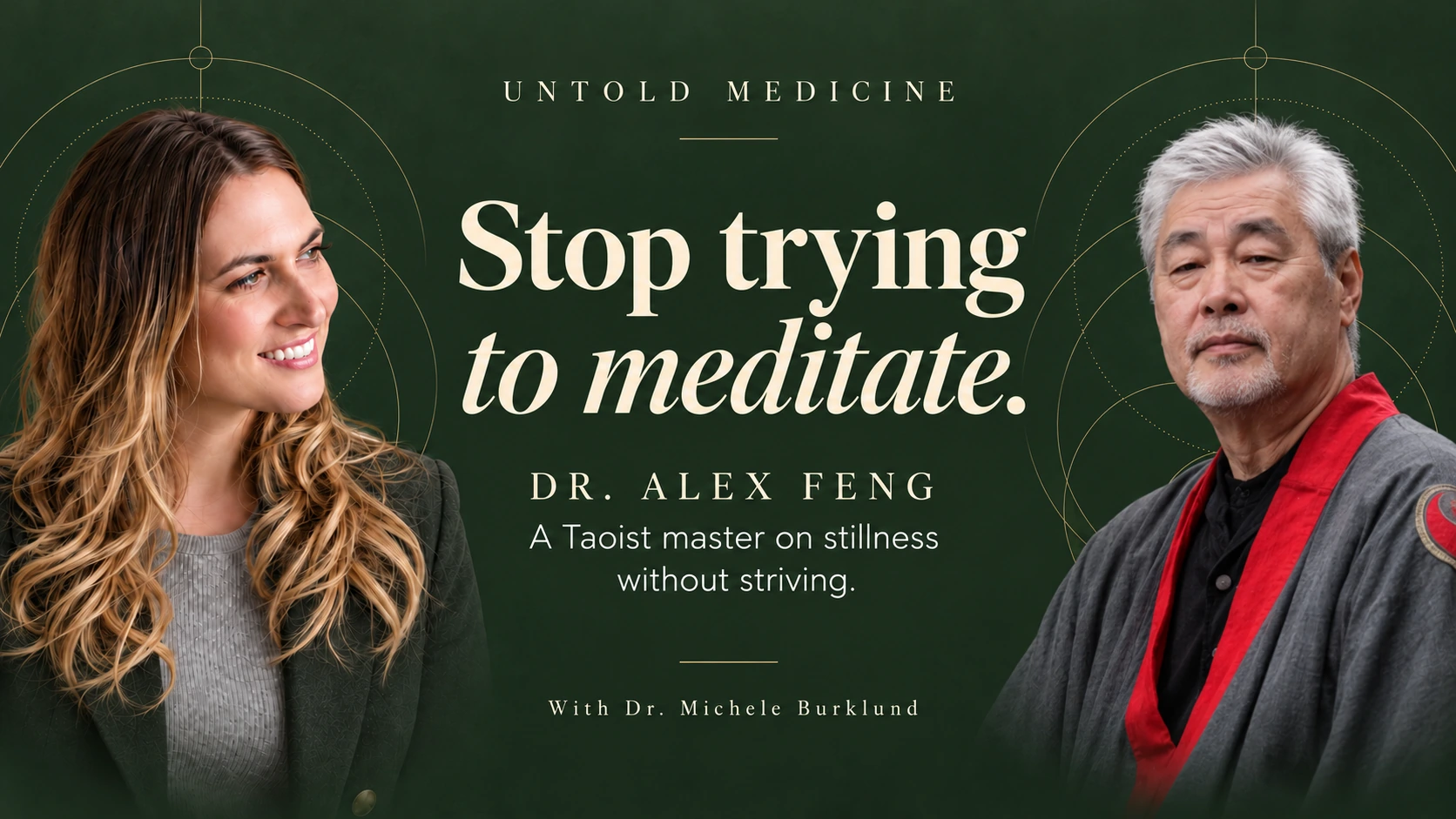
With Dr. Alex Feng
Taoist stillness, presence, and the possibility of letting meditation become a way of being.
Listen to the conversation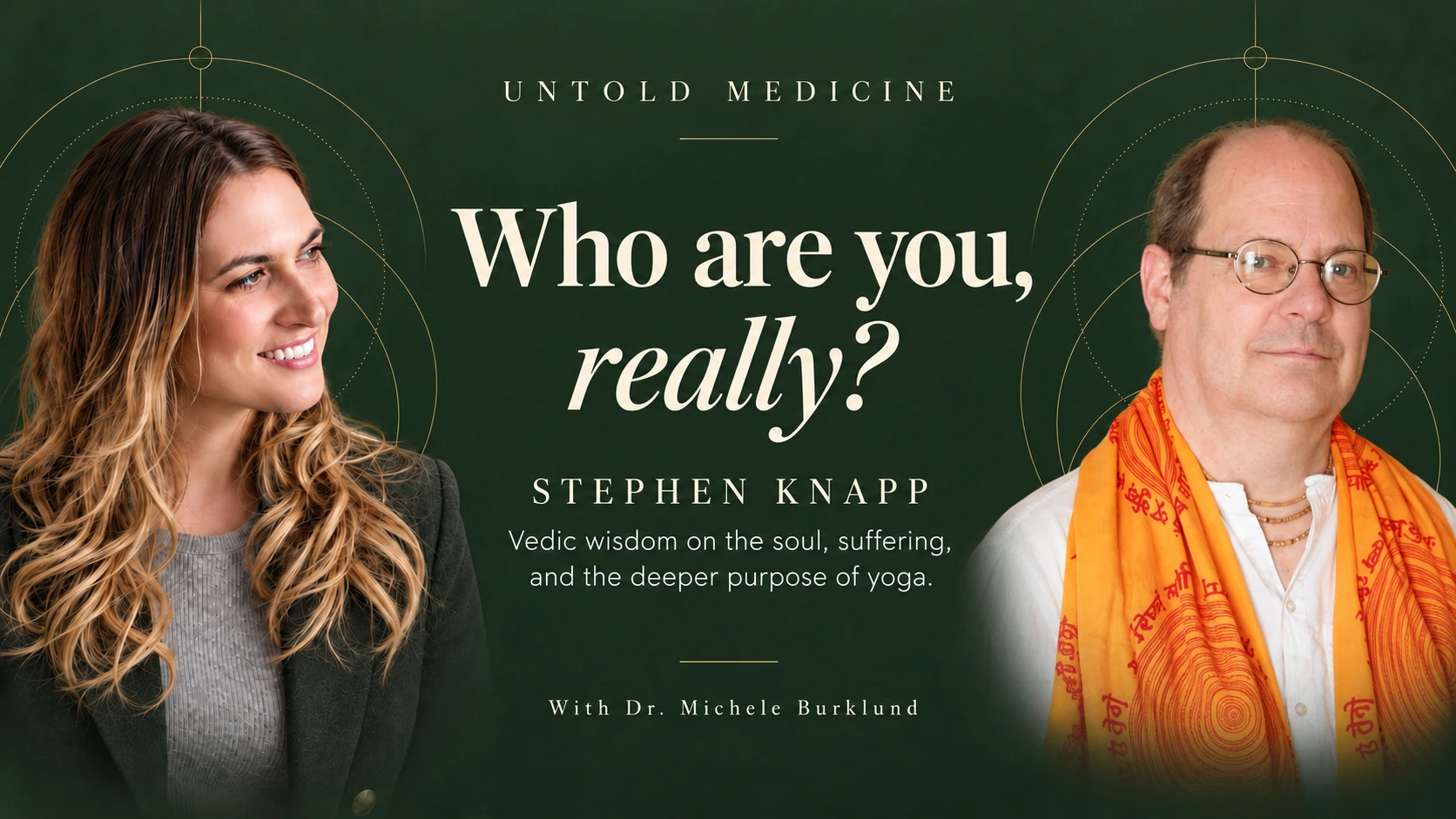
With Stephen Knapp
Vedic wisdom, spiritual identity, and the deeper questions beneath the roles we carry.
Listen to the conversation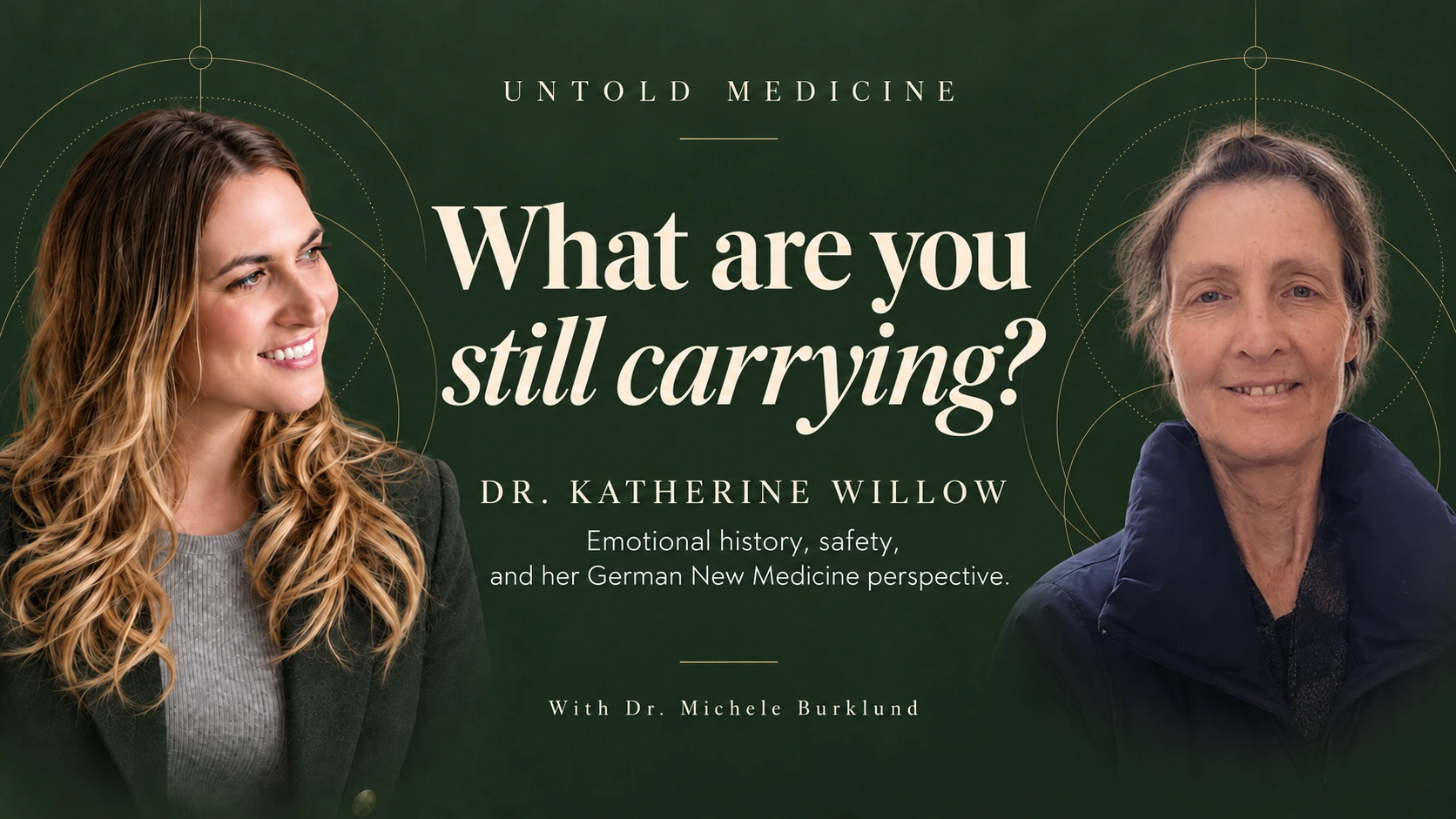
With Dr. Katherine Willow
A conversation about emotional history and personal meaning, through Katherine’s perspective on German New Medicine.
Listen to the conversationThe grief medicine collection
Read what feels useful today. Science, practical care, ancient wisdom, and space for the parts of grief that cannot be measured.

The body
Understanding the physical effects of grief
Read the article
Rest
Sleep, exhaustion, and a gentler way into the night
Read the article
Nourishment
Nourishment when grief changes your appetite
Read the article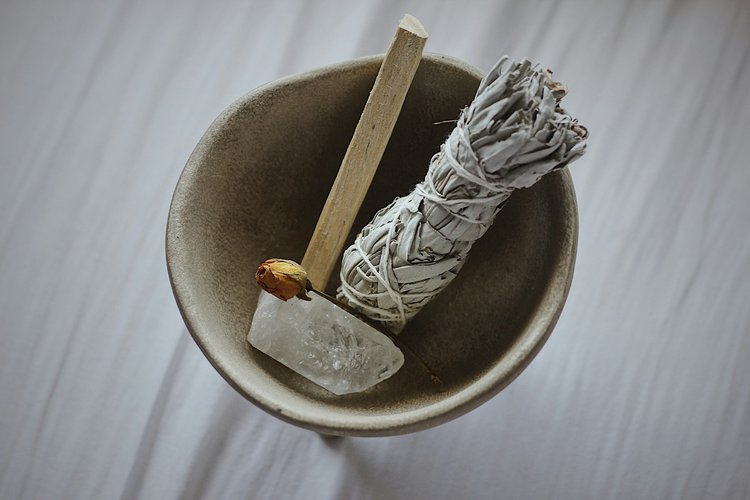
Ritual & spirit
Nature, Taoist wisdom, and living with grief
Read the article